
Queens Library Exhibit Celebrates New Deal-Era Art for the Masses
The exhibit at a public library branch in Ridgewood, Queens, showcases the etchings, lithographs, relief prints and serigraphs that were produced as part of the Federal Art Project.

Federal funding for libraries and museums, along with support for institutions that maintain historical public artwork in the United States, is currently under threat of being completely obliterated. The Trump administration’s proposed dismantling of the Institute of Museum and Library Services — which provides federal funds to libraries, museums and archives — and gutting of the General Services Administration’s fine arts and preservation units are harbingers of a world without public access to art and literature. Right now, the idea of large-scale federal investment in visual art production, exhibition, and education for the masses is something of a far-off fantasy. Once upon a time, during the New Deal era of the 1930s and 40s, there was, in fact, an American program that provided funding for jobs and education in the arts across the country.
Today, at a public library branch in Ridgewood, Queens, art from the Works Progress Administration’s (WPA) 1935–1943 Federal Art Project is on public display. The exhibit, The Work of Art: WPA Prints from the QPL Archives, opened Feb. 11 and will be up until March 24. It showcases etchings, lithographs, relief prints and serigraphs that were produced as part of the WPA Federal Art Project (FAP).
The Federal Art Project established and operated over 100 community art centers and galleries across the country before the program was phased out in 1943.
The Work of Art, because of its integration into one of our last strongholds of public space — the public library — echoes the FAP’s often overlooked legacy of socialized art production. Youth Counselor Isa Dorvillier and Librarian Sarah Healy, who co-curated the exhibit in collaboration with the Queens Memory Project and the Queens Public Library Archives, have provided us with the opportunity to consider a thought-provoking road not taken: What if the United States had continued to fund art for the masses on such a remarkable scale?
Behind the circulation desk of the Ridgewood Branch’s main floor, alongside two lithographs and a woodcut by other WPA-FAP artists, Elizabeth Olds’ playful serigraph Tourists hangs facing the stacks that line the back wall of the library. The print, which portrays a vibrantly-dressed group (presumably the titular tourists) so engrossed in observing two men (seemingly preparing a fishing net) that all these onlookers, other than one woman who sits with her dachshund, are uniformly leaned forward.

Courtesy of the Fine Arts Collection, U.S. General Services Administration New Deal Art Project. On extended loan to Queens Library.

Courtesy of The Archives of American Art.

Courtesy of The Archives of American Art
Olds not only produced striking works as a pioneering figure in the then quite new art form called screenprinting, referred to above as serigraphy, while employed in the Graphic Arts Division of the WPA-FAP in New York, but she was also a sharp theorist of the significance of the programs under which she was employed. Olds wrote while reflecting on FAP programs in her 1936 essay “Prints for Mass Productions” that “exhibitions in schools, libraries, hospitals, municipal airports, have taught many Americans that art is no rare, esoteric commodity but something they can sincerely and spontaneously enjoy.” Olds also believed that there was a democratizing potential latent in the very media of printmaking; in her words, “art will at last flourish on a democratic scale” when prints are unleashed as a genuinely public art form.
The WPA-FAP established and operated over 100 community art centers and galleries across the country before the program was phased out in 1943 to be superseded by jobs created in the war economy. The 1937–1942 Harlem Community Art Center — “a uniquely interracial community” — was one of the high points of the ethos of diversity represented by the program, codified in the non-discrimination clause of the FAP, which allowed previously unrecognized artists of color and women to receive jobs, art education and public attention.
Robert Blackburn, the son of Jamaican immigrants who went on to become a master printmaker for some of the most prominent artists in the American scene, studied with artist and lithography teacher Riva Helfond at the Harlem Community Art Center early in his career. Jackson Pollock, who was employed by the FAP from 1938 to 1942, is also thought to have been introduced to screenprinting, a form that he would go on to experiment with extensively, by visiting the New York graphic arts workshops run by the program. As co-curator of The Work of Art Isa Dorvillier expressed to me, “the WPA-FAP is in many ways responsible for giving printmaking [previously viewed as a commercial form] legitimacy within the fine art world.”
Dorvillier also commented that we “ shouldn’t be too starry-eyed” when memorializing the broader era of the WPA-FAP. In fact, there are echoes of the more troubling side of this American era embedded in The Work of Art, like the story of Fuji Nakamizo, whose work is featured in the exhibit. Nakamizo, a Japanese-born artist who worked for the WPA-FAP in New York City, was detained in a Japanese internment camp in Topaz, Utah, in the early-to-mid 1940s. Nakamizo ultimately died in New York in 1950 after being released from internment. The Nakamizo etching featured in the show, The Last Preserve, portrays one of his favorite subjects, birds — namely, a flock of geese flying over Central Park. Although little is known about Nakamizo’s internment, Emblem of Strength and Courage, an etching depicting a perched eagle with warplanes in the distance that Nakamizo presumably created while detained in Utah, implies an ironic criticism of the administration that first employed and supported him before relocating him to a concentration camp as part of a catastrophically xenophobic policy.
The program’s community art centers, which delivered art education to both children and adults, didn’t only exist in cosmopolitan hubs like New York City. Librarian and The Work of Art co-curator Sarah Healy commented that in doing research for the exhibit, she was particularly moved by the work from her home region. “I’m from the Midwest originally,” she said, “so I actually got a little emotional seeing art created at the center in Sioux City, Iowa. There were 17 of these centers in Florida, 12 in Oklahoma, nine in Wyoming, three in Iowa, three in Mississippi, to name just a few, and they all encouraged the students who passed through that what they saw every day was worthy as a subject of art and that they themselves were worthy of a government’s investment in their happiness.”
The Work of Art summons the more philosophical dimensions inherent to the very existence of these prints — making art is work. Art production is a process that requires particular resources, both in terms of labor and materials. As American life becomes more and more stratified, with wealth concentrated in the hands of a small class of oligarchs while most Americans live paycheck to paycheck, we have to ask ourselves what kind of life we want to provide for everyday people. We need to be worried about working-class and poor people’s access to essentials like housing, food and healthcare, yet we also need to be worried about social access to the programs and spaces that cultivate a full and vibrant life. We cannot allow art to be confined to private, elite spaces. A healthy society depends on public access to art.
The question remains: Will we ever return to socially funding art production, education, and exhibition on a national scale? Until then, free exhibits that are universally accessible to New Yorkers like The Work of Art give us an occasion to consider what could be.
The Indypendent is a New York City-based newspaper, website and weekly radio show. All of our work is made possible by readers like you. We’re halfway to our winter fund drive goal of raising $50,000. Please consider making a recurring or one-time donation or subscribe to our monthly print edition and get every copy sent straight to your mailbox.
Related Coverage
-
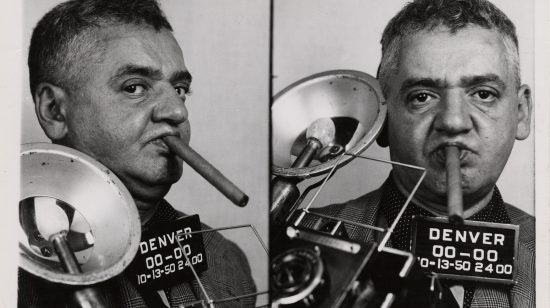
The photographer Weegee captured the raw, gritty reality of life in NYC during the 1930s and ’40s.
-

Rucker Park: From Streetball Jewel to National Treasure
Harlem’s Rucker Park has been designated a national commemorative site for its contribution to Black history and culture.
-

Brooklyn Museum Walks Back Layoffs
How workers at the Brooklyn Museum successfully mobilized against proposed mass layoffs.