
Op-Ed: The House Wins, Coney Island Loses: The Threat of a Billionaire-Backed Casino to America’s Playplace


How can one save Coney Island?
Ever since March 2023, that has been the question murmuring beneath the discourse surrounding “The Coney,” a $3 billion dollar casino project proposed to “transform” New York’s historic playplace, Coney Island, into a “vibrant, year-round economic powerhouse.” It exists as just one proposal in a storm of eleven casino licensing bids gripping the city; a maximum of three will be approved by the state at year’s end.
In the midst of this, The Coney is moving along. It was approved to move forward by the New York City Council in June, and was recently laid before the feet of its Brooklyn-based Community Advisory Committee (CAC). In the world of New York politics, it seems the casino is an inevitability.
But The Coney is nothing but a con.
In reality, the project would be the death of Coney Island’s history, its culture, and its people, with most of its profits being taken right to the pockets of its elite billionaire sponsors. New Yorkers must stop this slow death sentence for America’s Playground.
Outwardly, The Coney has put on a happy face. A tagline has emerged for the project: “It just makes sense.” And that tagline is set against the stark reality of Coney Island. Today, its people live on a median income over $30,000 less than the rest of New York City, and suffer under the third-lowest employment rate in the city by-neighborhood. Hope remains in its steadily building small businesses and job growth. It’s clear: Coney Island needs more good-paying, permanent jobs. Its rich history and culture, upheld by nonprofits like Coney Island USA and the amusement parks Luna Park and Deno’s Wonder Wheel, need a rich present now.
Thor Equities—a company that since 2006, has tried again and again for a Coney Island casino resort through land grabs, demolitions, and closures throughout the area—is at the head of the project. Partnering with Saratoga Casino Holdings, the Chickasaw Nation’s Global Gaming Solutions, and Legends Hospitality, they promise prosperity through The Coney.

Their work boasts a massive, multi-use complex that promises to add as many as 10,000 jobs to Coney Island’s streets. $200 million dollars would be poured into a community trust, established to “fund workforce development, affordable housing, and public safety.” The project also promises to hire up to 60% of its “operations” jobs from minority populations, as well as 40% of its construction jobs. And more is promised—A public park accessible from Deno’s Wonder Wheel, upgrades to the local electrical grid, a shopping center, a convention center, walkable streets, boardwalk reconstruction, a ferry—a new Coney Island. Peter McIny, representing Thor Equities, said the project was nothing less than a “rebirth for this beloved landmark.” It just made sense.
But then, common sense rang out in the room.
Marissa Solomon, one of the six-person advisory committee, questioned the corporate representatives on their published statistic that only 8.7 percent of the proposed jobs will go to Coney Island residents, a net gain for the community of a mere 182 jobs, versus the clean 10,000 promised.
Thor Equities response to critics of their casino project: Trust us. We will improve the plan, after you’ve already approved it. We will keep you at the table, after you’ve already given us every chair.
The Corporate team responded they’re open to ideas on how to improve that, without numbers as to how.
Solomon then pushed them on their DEI practices. According to them, Thor Equities had no Black executives listed in the company’s last disclosures, as well as only one Hispanic manager, all while doing business in New York, one of the most diverse states in the country. Chickasaw Nation’s Global Gaming Solutions supposedly had similar statistics, boasting one Black employee and one Hispanic employee in their respective territories. With these facts in hand, Solomon questioned how their DEI practices for the Coney would turn out, considering their past of not adhering to them.
The Corporate team did not deny this, but responded that they’re nevertheless committed to diversity, and would hire diversely. Again, without numbers as to how.
Who would serve on this “community trust board”? They say: Appointees of the casino.
When will residents eligible for the construction jobs be trained, considering that, according to the Corporate team, the casino is already “shovel-ready?” They say: Only after the project is complete.
What about traffic and parking concerns? They say: Parking lots for spillover parking will be used. Never mind that the parking lots they list either don’t exist, or will not exist by the time the project is finished due to demolition.
Has this consortium of corporations been in communication with Luna Park, Deno’s Wonder Wheel, and Coney Island USA? Have they spoken to other local businesses and residents? They say: Don’t worry, “we’re having productive conversations” (though Solomon confirmed—they are not).
And so the pattern emerged from the Corporate team’s answers to all these questions: Trust us. We will improve the plan, after you’ve already approved it. We will keep you at the table, after you’ve already given us every chair. We will help you, after you’ve already given everything to us. The Coney will work for us, and as far we let you know, it’ll work for you. You will be made to agree.
This first CAC meeting ended, but the project will go on. Community hearings are to include today, on September 10th, and the CAC must vote on the resolution by September 30th. At least four members must approve the Coney before its plans can move forward to New York’s Gaming Facility Location Board.
And so the question comes up again: How can one save Coney Island?
At this moment, Coney Island USA and Luna Park both have petitions anyone can sign, boasting over 20,000 and 10,000 signatures, respectively.
At this moment, the final community hearing is scheduled today, on September 10th. Brooklynites, New Yorkers, Coney Islanders, and anyone concerned to make their voices heard will have one last chance to directly sway the Community Advisory Committee, either in-person or by-Zoom.
At this moment, Coney Island, America’s playground, lies in the people’s hands to sign, to advocate, to protest for its survival. Emailing the CAC (TheConeyPublicComment@nystec.com), protesting at the project site, and making public testimony can only help.
To some, this version of “progress” is inevitable. To some, The Coney will pump new money into the area. To some, the half-truths, the lies, and the nonsensical numbers in this plan are trivial. It might be worth the economic boom they see coming, or maybe, it’s about time someone “cleaned up” Coney Island.
But the truth is: The Coney would kill Coney Island. No boom is coming, not for its people. No community trust that they can actually trust, nothing close to 10,000 jobs, no planning for pedestrians beyond casino-goers, and no accountability. Only the billionaire heads of this project would make away with mountains of profit, and the community? Strapped to the anchor of crime, pollution, decay, job stagnation, and raised rents that urban casinos across the nation have brought to their hosts.
Deeper than that, would be the loss of a central American story. Coney Island, at its core, belongs to everyday dreamers: The small-businessman, the working-man, performers and homegrown engineers with paper mache, wires, and a vision. “Carnies,” “freaks,” and all sorts of magic-makers, wowing stunned crowds for generations. It all happened because of a community, not corporations. It is this community that brings us the Mermaid Parade, the Wonder Wheel, the Cyclone, Nathans, William’s Candy, Paul’s Daughter, and so much more.
Controversy seems to have engulfed much of the proposed New York casinos: Bally’s Bronx near Throggs Neck has its community divided, Empire City Casino’s proposed expansion in Yonkers has been received lukewarmly at best, and the mere idea of a Caesar’s Palace in Times Square has locals recoiling. Casino proposals like CitiField’s have developed real chances of success, but still, none of their odds look like sure bets.
In all this, The Coney is among the least sensible. Behind it is a company that has always seen Coney Island as an investment; they see value and profit, not people and history. Why give them what they want? Why give this iconic community up to billionaire interests?
Why face a future where, no matter how much the House wins, Coney Island loses?
The Indypendent is reader-funded. We publish a free monthly newspaper, a website, a weekly radio show on WBAI-99.5 FM and more. To make a one-time or recurring monthly donation, click here.
Related Coverage
-

Morningside Heights Residents Protest Continued Gate Closure at Fortress Columbia
After nearly two years of continuous disruption to movement in their neighbourhood, community members say it’s time to open up the campus again.
-

Adams Continues Chaos For Deliveristas
Two landmark minimum pay laws vetoed while NYPD targets delivery workers with criminal summons that increase their risk of deportation.
-
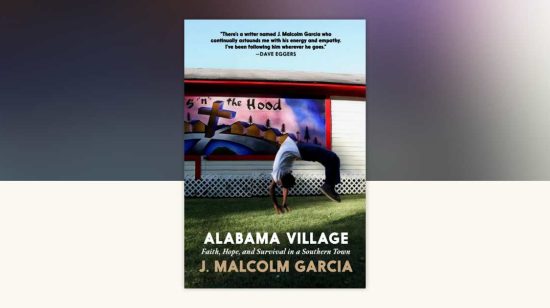
'Alabama Village' Looks at Where Time and Politics Forgot
J. Malcolm Garcia’s portrait of a small town in the South is unwavering in centering the humanity of its subjects, even though it leaves some questions unanswered.