
New Museum Exhibit Celebrates the Heritage, Resiliency of the Lenape People
The Lenape people inhabited for millennia the land on which New York City was built. And their culture continues to this day throughout the eastern half of North America.


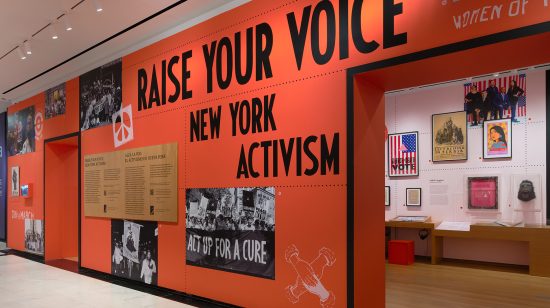
When you arrive on the second floor of the Museum of the City of New York, the first thing you see is “Raise Your Voice New York”, an exhibit graced with the activists and protesters that have fought to make this city more equitable, more just, and more humane. Make a right turn in the middle of that hallway, and you find a corner of the museum that is now dedicated to the original protesters and activists, who also just happen to be the original people and inhabitants of this land, the Lenape. Filled with crafts, videos, musical instruments, maps, and stories, this exhibit – “Halumii Ktapihna: Lenape Legacies and Futures” – is a remarkable beginning to a story that should have been more widely told a long time ago, but better late than never. And this is a good beginning.

Full disclosure: I am a member of one of the tribes recognized and featured in this exhibit, the Nanticoke Lenni-Lenape tribal nation of New Jersey. Members of my tribe are present in this exhibit through instructional video, clothing, and music. One of the most beautiful and equitable aspects of this exhibit, as a Lenape, is that through the artifacts presented and the stories being told, the various Lenape tribes, nations, and communities that make up the broader Lenape diaspora are showcased individually, while at the same time being included together as all members of one Lenapehoking (Land of Lenape).
“One of the most beautiful and equitable aspects of this exhibit, as a Lenape, is that through the artifacts presented and the stories being told, the various Lenape tribes, nations, and communities that make up the broader Lenape diaspora are showcased individually, while at the same time being included together as all members of one Lenapehoking (Land of Lenape).”
This is critically important as the current recognition system by both federal and state governmental agencies has created a completely unequal and problematic hierarchy that recognizes some tribal communities with resources and prestige, and completely shuns other ones. This not only deprives some tribal communities of healthcare and scholarships, but also fuels disastrous and vicious infighting within Lenape and other Native communities. No doubt some of this is by governmental design, and it’s tragic that some Native communities, including some Lenape communities, buy into it.
But that is not present in this exhibit. To my pleasant shock and surprise, the infighting and typical governmental poison that infects so much of our current ethos is put on hold in this Lenape exhibit. To be sure, they mention the current inequities caused by government systems, and through maps and narratives, explain how and why the current Lenape diaspora is fractured and spread throughout the entire eastern half of Turtle Island (North America). Genocide, forced removal, and attempted erasure are all visible on a map in the exhibit that shows a timeline and geographical route of our own trail of tears.
Yet that is not the heart of this exhibit, nor is removal a complete narrative, as some tribal nations and communities, including my own, are still and have always been on the original lands. What is the heart of the exhibit is that despite all that has happened, and still is attempting to happen, we, as Lenape, are still here and the continuation of our culture, whether it be in Oklahoma, Wisconsin, Ontario, New Jersey, Delaware, New York, Pennsylvania, or anywhere else, is the original activism of the United States. Artists and members from Lenape tribes are presented from all of these communities. You can see and read about a fancy dance shawl, listen to a “Trick Song” or “Turtle Island Song,” learn about “pucker-toe” slippers, have a Lenape language lesson, see a ceremonial drum, and listen to a Lenape Creation Story. This is the original culture of this land, and the fight for its survival is the root of all the stories of the fight for American justice.


Related Coverage
-
“Capitalism: A Global History” by Harvard professor Sven Beckert lays out his argument on the origins of capitalism in his drawn out but ultimately compelling book.
-

"I Love My Culture": Leonard Peltier on His Life and Art
Indigenous activist and former political prisoner Leonard Peltier talks about his art his release from prison with The Indy.
-
New York City’s History of Resistance Chronicled at Museum of the City of New York
Sara Seidman and Neal Rosenstein discuss the new permanent exhibition that displays the tactics New Yorkers have used to demand change in their communities.