
NYC’s Boom and Bust Economy: Why Elite-Driven Growth Undermines the City’s Economic Stability
What can history can teach Zohran about broad based prosperity? Historian Daniel Wortel-London explains.


In The Menace of Prosperity, Daniel Wortel-London offers a timely and engaging analysis of three distinct periods of fiscal crisis in New York City — the 1870s, 1930s, and 1970s. Wortel-London explores how different groups diagnosed the city’s economic troubles in each period and what lessons their remedies hold for present-day activists and policymakers. He argues that public subsidies on behalf of elite-driven growth repeatedly spurred economic collapse in Gotham — a dynamic that Zohran Mamdani and progressives literally cannot afford to repeat.
Here is The Indypendent’s recent conversation with the author.
Give us a brief overview of the three periods you cover.
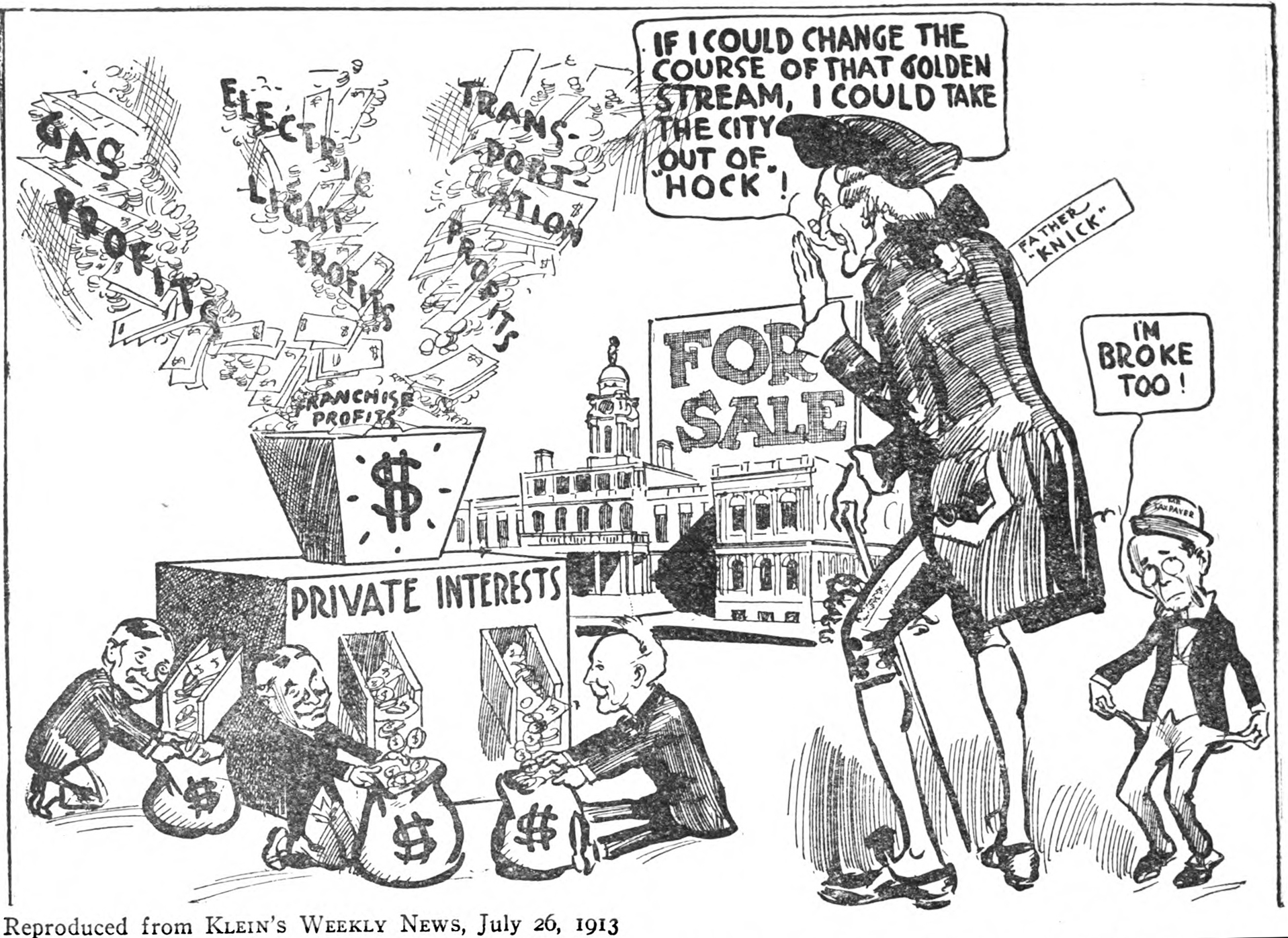
In the 1870s, one in five American cities went bankrupt, and many New Yorkers blamed the crisis on public subsidies to private real-estate developers. Organizations such as the Knights of Labor responded by demanding worker-owned cooperatives and publicly owned enterprises to democratize and stabilize urban growth. By the early 20th century, however, a new cohort of urban liberals argued that taxing speculative development — not replacing it — was the key to a healthy city. This approach became deeply embedded in modern urban policy.
The Great Depression revived these debates. Reformers like Catherine Bauer and Lewis Mumford championed public housing and long-range planning as tools for stabilizing land markets and municipal finances. Yet by the 1940 federal programs on behalf of powerful real estate interests helped sidelined this vision. The boosterism of earlier decades survived the downturn bruised but intact.
In the post war period, liberal policymakers paired corporate-centered growth strategies with redistributive welfare programs. When the fiscal crisis of the 1970s hit, these same leaders chose to retrench the city’s social welfare apparatus rather than its corporate subsidies. And while contemporary debates still revolve around whether the wealthy should be taxed more heavily, largely forgotten are earlier critiques that saw the city’s fiscal instability as a product of elite economic power itself.
Many people know Henry George primarily as a labor radical who lost the 1886 mayoral race. But as you show, his ideas shaped New York’s political economy well into the 20th century. Tell us about his work.
George argued that rising land values — maintained by speculative landlords — harmed local finances and undermined productive enter – prise. High land prices drove manufacturers and commercial firms out of the city. When land did sell, landlords claimed the “unearned increment,” a rent windfall that cut into the income of both workers and capitalists. Speculation also fueled boom-and-bust cycles that destabilized local institutions and households. George insisted that taxing away this increment would lower land prices, attract productive firms, and create a more stable and equitable urban economy. His ideas appealed across class lines: artisans dealing with unemployment and wage cuts, manufacturers upset about high taxes and land costs, homeowners seeking relief, officials looking for steady revenue, and professional economists appalled by the inefficiencies of speculative land markets. Their efforts culminated in the appointment of Lawson Purdy — a committed Georgist — as president of the city’s Tax Department, where he significantly increased taxes on land. But Purdy and later Georgists reinterpreted George. Rather than lowering land values, they aimed to raise them — and then tax the gains to fund public purposes. Purdy’s support for debt-financed subway expansion and the pioneering 1916 zoning code sought, in his words, to “arrange streets and public places that privately owned land may be put to its best use.” These policies expanded the city but also helped set the stage for the speculative bubble that fueled the city’s 1930s era fiscal crisis.
Tell us a bit about how the city catered to white-collar industries in the mid-20th century. Was that an “inevitable” shift?
It was far from inevitable. In 1944, blue-collar workers made up 60% of the metropolitan workforce and nearly half of the city’s labor force. Some officials recognized this importance. A 1937 industrial survey commissioned by the city comptroller warned that “we cannot take our continued industrial power for granted” and urged the creation of an agency devoted to retaining and attracting manufacturers.
Most leaders, however, were — as labor historian Joshua Freeman noted — “sanguine” about the loss of industrial jobs. A 1956 New York Area Research Council report concluded that city agencies had “not been sufficiently sympathetic to and conscious of manufacturing as a vital force.” Instead, New York doubled down on attracting white-collar firms. Policymakers assumed that office industries generated higher taxable incomes and represented the “highest and best use” of urban land. Even at the height of the welfare state, urban economists focused on making the city hospitable to corporations through zoning, assessment policies, and urban renewal. As one planner put it, white-collar workers could not be expected to “wade through the filth and insecurity” of “obsolete” industrial neighborhoods.
By the 1970s, the limits of this strategy became painfully clear. The growth of New York’s welfare state couldn’t compensate for the loss of well-paying entry level manufacturing jobs that had been sacrificed for Gotham’s white-collar economy. The costs of poverty and unemployment were then shunted onto the city’s welfare state, burdening public finance. The lesson is clear: to establish both fiscal stability and economic justice, we need an economy that provides for people the first time around.
Jane Jacobs is best-known for challenging Robert Moses’ car-centric blueprint. Can you explain how she also critiqued corporate hegemony?
For Jacobs, a healthy urban economy was defined less by the wealth of individual firms than by the collective innovation generated through dense networks of small enterprises. Economic vitality grew from diversity — not economies of scale, but economies of collaboration. Cities should therefore nurture a varied ecosystem of small and medium-sized firms rather than chase large corporations.
Her emphasis on diversity extended to income. A citywide push for uniformly high land values, she argued, would drive out low-equity firms and low-income residents and immigrants whose contributions were essential to urban innovation. Policies that produced “premium land and building prices” promoted what she called “Cataclysmic Money”: the self-destruction of economic diversity.
Instead, Jacobs believed that cities needed a mosaic of high- and low-rent spaces to sustain broad participation in the urban economy. Social mobility should come not from replacing working-class residents with middleclass newcomers but from enabling existing residents to move up. As she stated, urban economic development occurs not through the “replacement of the old slum population by a new and different middle-class population,” she argued, but through “the old population moving into the middle class.”
At its best, Jacobs’s framework offered a powerful critique of postwar corporate-centric development. As one reviewer put it, she suggested that “the men making machine parts in their little shops have been and will be more responsible for city growth … than the tycoons and conglomerates.” Yet Jacobs’s deep suspicion of planning constrained the translation of her ideas into policy. Her largely white, professional followers often protected their own neighborhoods from disruptive development without challenging the broader corporate transformation of the city. By the late 1960s, they preserved their brownstones but not a more egalitarian political economy.
You mention a number of leftist critics of the Wall Street-led response to the fiscal crisis of 1975. Did the Left offer viable alternative remedies?
We often interpret the 1975 fiscal crisis as the result of either an overgenerous welfare state or macroeconomic shifts beyond local control. But critics at the time highlighted the corporate welfare state as a major source of vulnerability.
Corporate firms, oriented toward national and global markets, could leave the city at any opportunity — which many did in the early 1970s. Those that stayed were exposed to global financial swings, making the city’s revenues volatile. Large portions of municipal debt financed corporate subsidies rather than public services. Economist William K. Tabb noted that New York’s “capital budget debt … owes far more to the bankerreal estate developer agencies than it does to helping the poor.” Even high welfare costs, critics argued, reflected private-sector power: low wages, high rents, and disinvestment produced the very social needs the city was blamed for funding.
Yet while fiscal radicals rejected liberal growth strategies, they struggled to articulate feasible alternatives. Their constituency was smaller than in earlier eras; the sunk costs of prior development patterns obscured the true social costs of the white-collar economy; and many radicals doubted that local governments could — or should — pursue alternative growth models at all. As one critic lamented in 1976, “the left … did not step in to fill the void.”
Still, several proposals pointed in promising directions: worker cooperatives, industrial planning akin to the Greater London Council’s efforts in the 1980s, and public banks. A public bank could redirect the city’s $100 billion in deposits away from extractive financial institutions and toward productive, democratically governed investments. Most important, these measures would expose the hidden burdens of the corporate-centered model and open political space for alternatives.
Your work ends with the ascent of the FIRE (finance, insurance and real estate) economy. What are the challenges that sector faces today? How might the Mamdani administration help chart a new direction?
Many of the weaknesses of New York’s 1970s-era FIRE strategy persist today, but with a new twist: AI. The share of New Yorkers employed in finance has already fallen — from 11.5% in 1990 to 7.7% today — and automation threatens to accelerate this decline. Wealthy individuals continue to live in New York, but wealthy employers are increasingly leaving — not because of taxes, but because the structure of white-collar work is changing. Given the city’s heavy reliance on high income taxes, this poses a serious challenge to the progressive agenda Mamdani champions.
At present, Mamdani’s platform focuses mainly on taxing the rich rather than transforming the city’s underlying economic base. This makes sense politically, but New York’s history suggests the danger of funding progressive goals on a regressive economic foundation. Zohran’s long-term success will require reducing the political and fiscal dominance of the wealthy through public banking, progressive procurement, community land trusts, and worker-owned cooperatives — in tandem with tax reform. There are promising signs here. Mamdani’s transition committees include leaders in the solidarityeconomy movement, such as Gianpaolo Baiocchi and the president of the New Economy Coalition, and is headed by anti-trust leader Lina Khan. As an assemblymember, he supported public-bank legislation, and he recently released a homeowner policy memo endorsing CLTs and co-ops.
Above all, Mamdani can help make visible what is usually hidden: the enormous public costs of New York’s corporate-oriented development model. Unlike the social welfare state, the corporate welfare state is largely invisible. Little attention is paid to the subsidies behind projects like Hudson Yards, the debt service they require, and the way an economy built for the 1% raises costs and renders the city unaffordable for everyone else. By exposing these dynamics, Mamdani can build the political constituency needed to support a more democratic, affordable, and resilient New York City economy.
Related Coverage
-

Op-Ed: The Affordability Crisis Is a Crisis of Capitalism
The gap between what people earn and what they have to pay for the necessities of life has the be closed by both an increase in what we earn and a decrease in the “cost of living.”
-

No Stopping Now: New Group Founded to Lead Push for Affordability Agenda
Our Time NYC is looking to channel the energy of Zohran’s canvassing army to build public support for raising taxes on the rich and major corporations.
-

Anti-Poverty Activist Takes on Real Estate Ally in North Brooklyn Assembly Race
DSA-backed Christian Celeste Tate is looking to topple the last remnant of a local political dynasty.