Another Gang Takedown, Another Cycle of Violence: Why Busts Don’t Stop the Bleeding


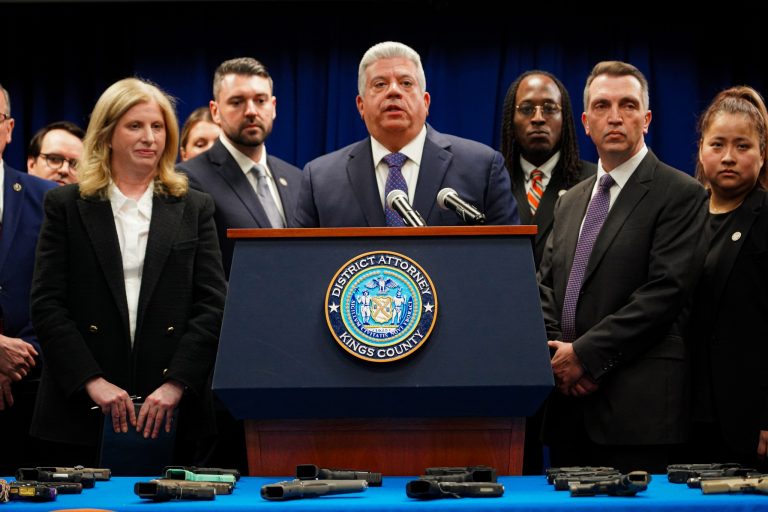
Brooklyn District Attorney Eric Gonzalez and NYPD Commissioner Jessica Tisch recently announced charges against 36 members of the Wooos and Choos gangs. They called it a victory; however, real victory would mean fewer Black and racialized young men in jail and more in jobs, classrooms, and community leadership. That is why we need a different approach: independent, community‑led institutions funded by the people who live in these neighborhoods. Moreover, wealthy individuals must step up and pay their fair share towards these initiatives, starting with credible messenger programs, mental health services, and youth training centers.
Over the past several years, news reports show at least a dozen distinct NYPD‑led gang takedowns between 2018 and 2026. Each one promised safety. Each one landed dozens of young men in handcuffs. And each one was followed by the next. If arrests worked as a long‑term solution, we would have run out of gangs by now. We are treating symptoms while ignoring the disease.
Drivers of Gang Violence: The Colonial Wound
To understand why gang violence persists despite waves of arrests, we have to look deeper. According to the psychiatrist and revolutionary thinker Frantz Fanon in his magnum opus The Wretched of the Earth, life under colonial domination produces a specific kind of psychological damage. Fanon writes that the colonized are kept in a permanent state of tension and rage, but because they cannot safely direct that anger at the true source of their oppression, it “periodically erupts into bloody fighting between tribes, clans, and individuals.”
Anyone walking through East New York or Brownsville today may bear witness to the same dynamic. Rather than enacting violence because of an oft-argued cultural deficiency, a more likely explanation is that some poor young Black males aggress each other because they have been offered no legitimate means to combat the sources of their tensions—the forces that displace their families, underfund their schools, flood their neighborhoods with illegal guns and chemical substances, and surveil their every move. The gang war is a distorted echo of a larger war being waged against entire communities.
Gendered Crosshairs: The War on Subordinate Males
It is no accident that nearly everyone swept up in these takedowns is a young Black or Latino male. Social dominance theorists call this the Subordinate Male Target Hypothesis: subordinate males suffer the worst racial discrimination in every domain, from schools to prisons. Black males are born with poorer health, suspended from preschool at shocking rates, pushed out of schools, and by college age they are more likely to be arrested or killed by police than almost any other group. They live with racial battle fatigue: constant stress, insomnia, anxiety, and high blood pressure. Their bodies are treated as threats regardless of what they do.
The Treadmill of Takedowns
A dozen gang busts in eight years have not ended gang violence. What they have done is cycle thousands of young men through a system that traumatizes them, stigmatizes them, and spits them back into under‑resourced neighborhoods with fewer prospects than before. Arrests alone cannot fix the colonial structure that produces the violence. Every time we rely on another takedown, we delay the real work of transforming the conditions that make gang membership seem like the only option.
A Different Path Forward
There is another way. As David Brotherton writes in “Eddie Ellis, Credible Messengers, and the Neoliberal Imagination of Anti‑Violence,” a radical model emerged from inside prison. Eddie Ellis, a former Black Panther, argued that many young people in prison are not broken but misdirected. They have a “warrior spirit” turned inward. One solution is credible messengers: formerly incarcerated or gang‑involved individuals who build trust through shared experience, and aggressive, omnipresent caring.
But credible messengers cannot succeed alone; we need independent, community‑led institutions free from state co‑optation. Clinicians should volunteer time to provide counseling without court orders or police referrals. Wealthy individuals, particularly from Black and racialized backgrounds like Jay‑Z and Beyoncé, Rihanna, Dr. Dre, etc., should invest in independent, community-led institutions with credible messenger programs, youth job training, technical education, and professional development. These institutions must do more than teach skills; they must politicize young people, helping them see that their individual struggles are connected to a larger history of structural violence and that collective action can achieve systems change.
The Choice We Face
Building independent institutions takes time, money, and trust. But continuing the cycle of takedowns is easier only in the short term. In the long term, it brings more funerals and more headlines. Gangs will keep recruiting if the predominant response is handcuffs. The bloodshed will continue if we refuse to treat the colonial wound at the heart of our city. The question is not whether we can afford to try something different; the question is whether we can afford another decade of the same.